
6 Questions to Ask When Choosing Tennis Shoes
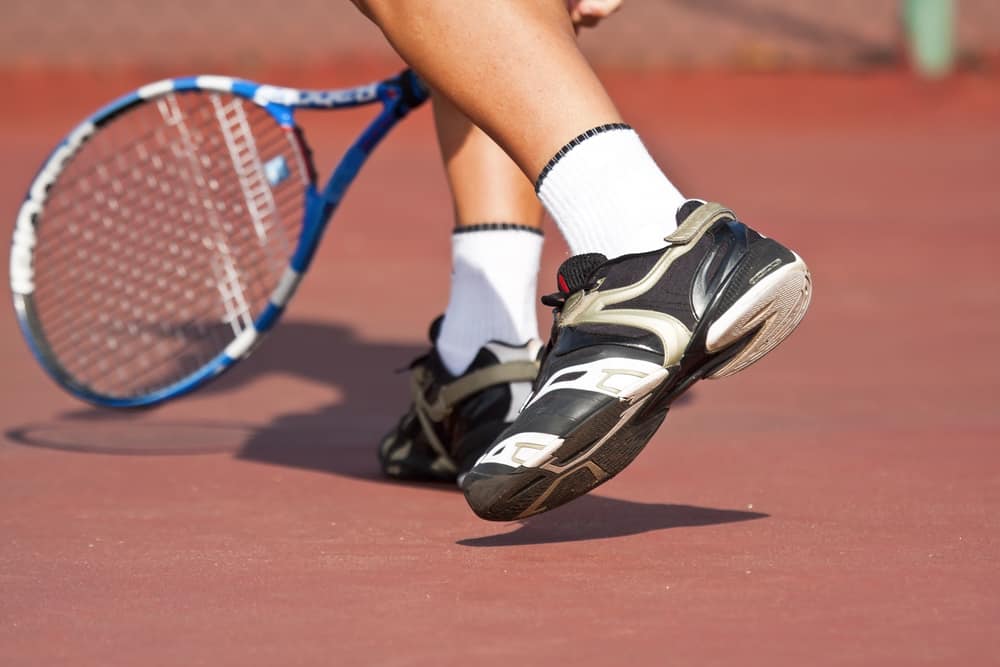
Tennis involves repeated starts, stops, and changes of direction. A comfortable tennis or court shoe is therefore a better default for regular play than a walking shoe or a running shoe designed mainly for forward movement. Ask these questions before choosing a pair.
1. Does the shoe fit my foot now?
Try both shoes with your tennis socks and any prescribed orthoses. Shop after activity or later in the day if your feet tend to swell. Your heel should remain secure, the widest part of your foot should align with the widest part of the shoe, and your toes should not touch the end during a hard stop. Check width and upper volume rather than buying extra length to relieve side pressure.
Size labels vary by brand, model, and gender category. Choose the last that fits your foot; women do not need to limit themselves to shoes marketed as women's if another size conversion and width fit better.
2. Which court surface will I use?
Match the outsole to the court and follow the facility's rules:
- Hard court: Look for an outsole designed for abrasion and enough cushioning for your comfort.
- Clay: Clay-specific tread is designed to manage loose material and allow controlled sliding. Clear packed clay from the tread after play.
- Grass: Use a nonmarking outsole permitted by the venue and intended to provide grip without damaging the court.
- Mixed surfaces: An all-court model is the practical compromise for many recreational players.
More traction is not always better: an outsole that grips too abruptly or clogs on the surface can feel unpredictable.
3. Does it feel secure during tennis movements?
Walk, perform a gentle split step, shuffle laterally, and simulate a controlled stop when trying shoes where permitted. The foot should not roll over the platform or slide inside the upper. Choose the lowest amount of shoe that still feels secure and comfortable to you; a heavy, stiff model is not automatically more protective.
4. Is the cushioning comfortable?
Foam names such as EVA or polyurethane do not predict the best shoe for an individual. Construction differs widely, and softer is not necessarily safer. Focus on how the whole shoe feels under the heel and forefoot during court movements. If you have an orthosis, make sure the shoe has enough depth and that the combination remains stable.
5. What does my game wear out?
Frequent baseline movement may favor durable outsole coverage, while players who drag a toe during serves or volleys may value a reinforced toe area. These are durability preferences, not diagnoses. Check the actual wear on your current shoes and consider an outsole warranty only after reading its surface and use restrictions.
6. Am I relying too much on pronation labels?
Pronation is a normal motion, and arch shape or an old wear pattern alone does not establish that you need a particular stability category. Start with comfort, fit, surface, and secure lateral movement. If pain persists, you repeatedly sprain an ankle, or a medical condition affects your feet, ask a podiatrist, physical therapist, or sports-medicine clinician for an individual assessment rather than self-prescribing from a footprint test.
When should tennis shoes be replaced?
There is no single schedule. Replace them when tread loss affects grip, the outsole or upper separates, the heel counter collapses, cushioning is visibly damaged, or the foot no longer feels securely held. Stop playing and seek medical advice for severe pain, inability to bear weight, marked swelling, or an injury that does not improve.